Emergency Waterproofing: What to Do When You Discover a Leak During a Storm
When a storm hits and water starts sneaking into your home, panic might be your first reaction. It’s overwhelming. Water can move fast, soaking carpets, furniture, and even foundations before you know it.
But you’re not alone. At Blue Star, we’ve seen these moments up close and know exactly what needs to happen—step by step—to keep your family safe and your home as dry as possible until help can get there.
Assess the Situation Safely ⚡
Before you grab a mop or hunt for towels, pause. Your safety comes first. Water and electricity do not mix—think of them like oil and fire.
Quick Safety Checklist
- Turn off power to affected areas at your breaker panel if you can do so safely. If water is near electrical outlets, switches, or appliances, stay away.
- Avoid standing water if you’re unsure about electrical hazards.
- Check ceilings for bulging or sagging—they could collapse under the weight of water.
- Keep children and pets out of the flooded zone.
- Wear rubber-soled shoes or boots to reduce slipping or risk of shock.
If you’re ever in doubt, step back and call for help. The National Fire Protection Association (NFPA) advises caution with water and electricity—never take risks in flooded conditions.
Contain Water Entry
You can’t stop the rain, but you can slow its path into your house. Even small actions count.
- Move valuables and electronics out of harm’s way.
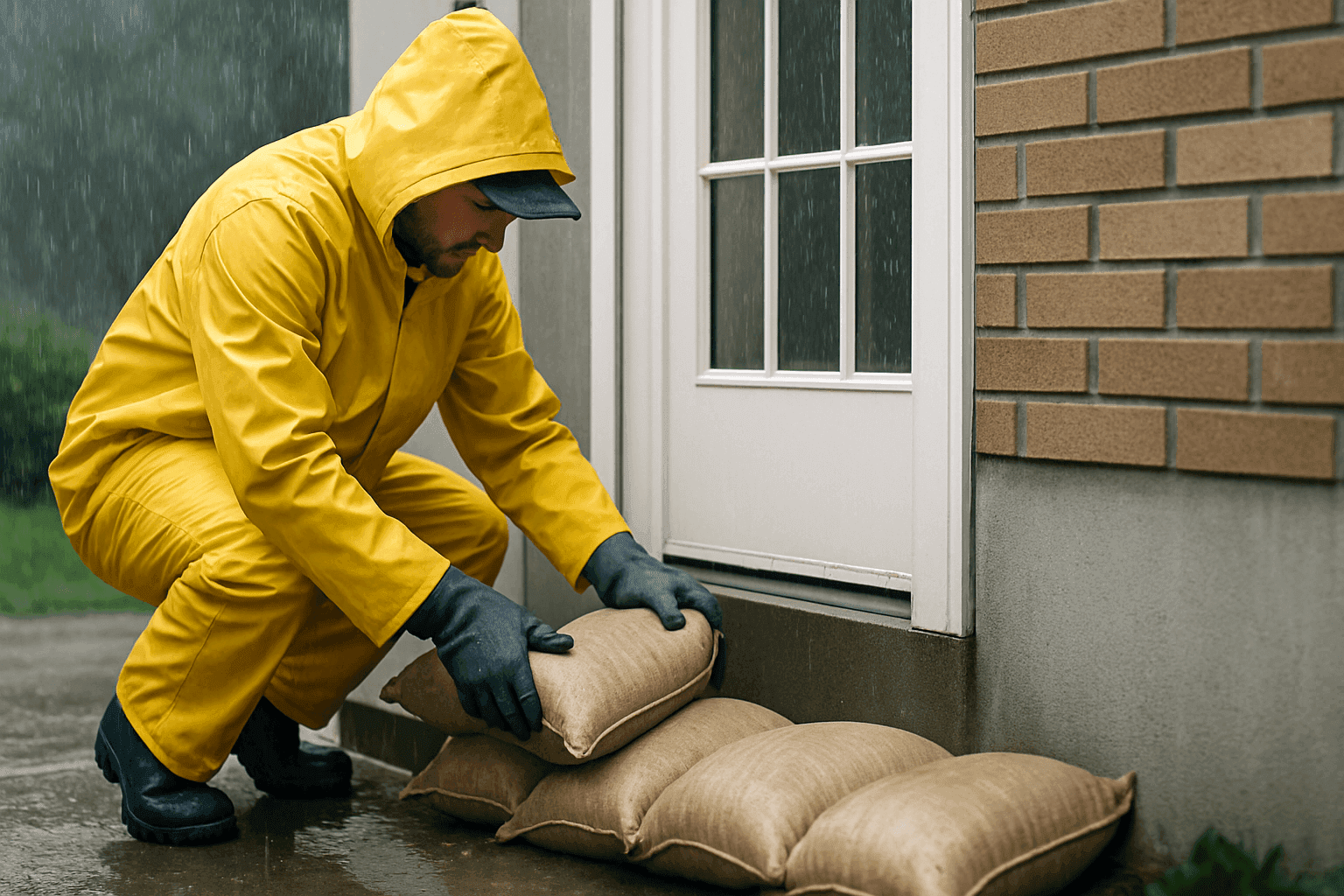
- Set up barriers: Roll up towels, lay down sandbags, or use plastic sheeting at entry points.
- Place buckets or large containers under active drips.
- Use a wet/dry vacuum if you have one (and it’s safe to use) to suck up standing water.
Think of it like building a sandcastle wall to keep the tide out. Every barrier helps buy you time and limits damage.
Temporary Leak Solutions
Sometimes you need to improvise. Here’s how to keep water at bay while waiting for professional waterproofing help:
- Apply waterproof tape or sealant to small cracks or gaps—these can hold for hours, sometimes longer, in an emergency.
- Cover the source with a tarp or heavy plastic, weighed down with books, furniture, or bricks.
- Stuff towels into window tracks, door bottoms, or cracks.
- Shut doors to isolate wet rooms and keep the rest of your house dry.
Remember: these are just temporary fixes. They’re like putting a patch on a leaky boat—it floats for now, but you’ll need a real repair soon.
When and How to Call for Professional Help 📞
Some leaks are too big—or too risky—to handle alone. Here’s when to call for emergency waterproofing services:
- Water is gushing in or spreading rapidly.
- You see electrical sparks or smell burning.
- The leak is coming from a foundation, ceiling, or multiple rooms.
- Mold is visible or there’s a musty smell already.
When you call Blue Star, be ready to share:
- Where the leak started and how fast it’s spreading.
- What you’ve done so far to contain the water.
- Any power outages or safety hazards.
The sooner you reach out, the faster we can respond. Emergency waterproofing services and Waterproofing Consultations near you can make a huge difference in protecting your home.
Post-Storm Cleanup and Prevention
Once the storm passes and professionals arrive, it’s time to start cleanup and think ahead.
Immediate Cleanup Steps
- Remove wet carpets, rugs, and furniture to prevent mold.
- Open windows to increase air flow if weather allows.
- Use fans and dehumidifiers to dry out damp areas faster.
- Clean with a disinfectant—floodwater can contain bacteria.
The Centers for Disease Control and Prevention (CDC) recommends cleaning and drying areas within 24-48 hours to prevent mold growth.
Preventing Future Leaks
- Schedule a waterproofing inspection to identify weak points.
- Upgrade your sump pump or install one if you don’t have it.
- Maintain gutters and downspouts so rainwater is directed away from your foundation.
- Consider French drain installation or grading and drainage solutions for persistent problems.
A maintenance plan and regular inspections will help keep your home dry, even in the next big storm.
FAQ: Emergency Waterproofing
How fast should I act when I spot a leak during a storm?
Immediately. Every minute counts when water is entering your home. Contain, block, and call for help if needed.
Can I use regular duct tape or should I buy special waterproofing products?
Duct tape works in a pinch, but it won’t last long. Waterproof tapes and sealants are better for short-term fixes.
What are signs that water damage is more serious than it looks?
Look for buckling floors, warping wood, peeling paint, or a strong musty odor. These are clues that water has gotten deeper than surface level.
Will my homeowner’s insurance cover storm-related leaks?
Coverage varies. Many policies cover sudden water damage but not long-term issues or neglect. Check your policy or contact your agent.
Local and Seasonal Considerations 🌧️
Storms can hit any time—but spring and fall are prime leak seasons. If you live in a flood-prone zone or an older home, regular waterproofing maintenance is even more important. Keep emergency supplies like sandbags, plastic sheeting, and a wet/dry vacuum on hand.
Final Thoughts
Water leaks during storms are frightening and stressful, but you have options. Acting quickly, staying safe, and knowing when to call for professional waterproofing services can mean the difference between a quick fix and a costly repair. Whether you need Waterproofing Consultations near you or fast emergency repairs, Blue Star is here with real solutions and clear answers.
Call Blue Star now — or reach us anytime at 888-853-4813 .