Preventing Mold After Water Intrusion: Essential Waterproofing Strategies for Homeowners
Water can sneak into your home like an uninvited guest. The real trouble often starts after the water is gone—when invisible mold spores wake up and spread. If you've experienced water intrusion, you know the urgency. It’s not just about drying out; it’s about keeping your family healthy and your home safe.
At Blue Star, we’ve seen firsthand how quickly a small leak can become a big problem. With the right waterproofing strategies, you can stop mold before it gets a foothold. Here’s what every homeowner should know.
Why Mold Forms After Water Intrusion 🦠
Mold is like a weed that only needs a little encouragement to grow. When water seeps into your basement or crawl space, it creates the perfect playground for mold spores. Warmth, moisture, and darkness—these three ingredients can turn a simple leak into a health hazard within 24 to 48 hours, according to the Centers for Disease Control and Prevention (CDC).
Timing Is Everything
- Mold can begin to grow within 24 hours of water exposure.
- Porous materials like drywall, carpet, and wood are especially vulnerable.
- Humidity over 60% acts like fertilizer for mold.
Conditions That Encourage Mold
- Stagnant water in basements, crawl spaces, or behind walls.
- Poor ventilation that traps humidity.
- Hidden leaks that go unnoticed for days or weeks.
Think of your home’s structure as a sponge. Once water gets in, parts of it may never truly dry out without intervention. That’s why quick action is crucial.
Immediate Steps Post-Incident
When water finds its way inside, time is your enemy. Here’s what to do right away:
Drying Out—Fast
- Use fans and open windows to increase airflow.
- Dehumidifiers can pull moisture from the air—run them non-stop for the first 48 hours.
- Remove wet carpets, area rugs, and furniture to a dry location.
Ventilation Is Key
- Prop open doors and closets to let air circulate.
- If safe, use your HVAC system’s fan to keep air moving.
Remove and Discard Soaked Materials
- Bag up waterlogged insulation, drywall, and fabrics.
- Don’t try to save items that can’t be fully dried.
- Dispose of moldy materials following local waste regulations.
Safety First
- Wear gloves, goggles, and an N95 mask if you suspect mold.
- Turn off electricity in affected areas if water is present near outlets or wiring.
For guidance, refer to EPA’s Mold Cleanup in Your Home guidelines.
Waterproofing Solutions for Mold Prevention
Prevention isn’t just a buzzword—it’s a plan. Waterproofing is your home’s shield against future water and mold issues.
Install Physical Barriers
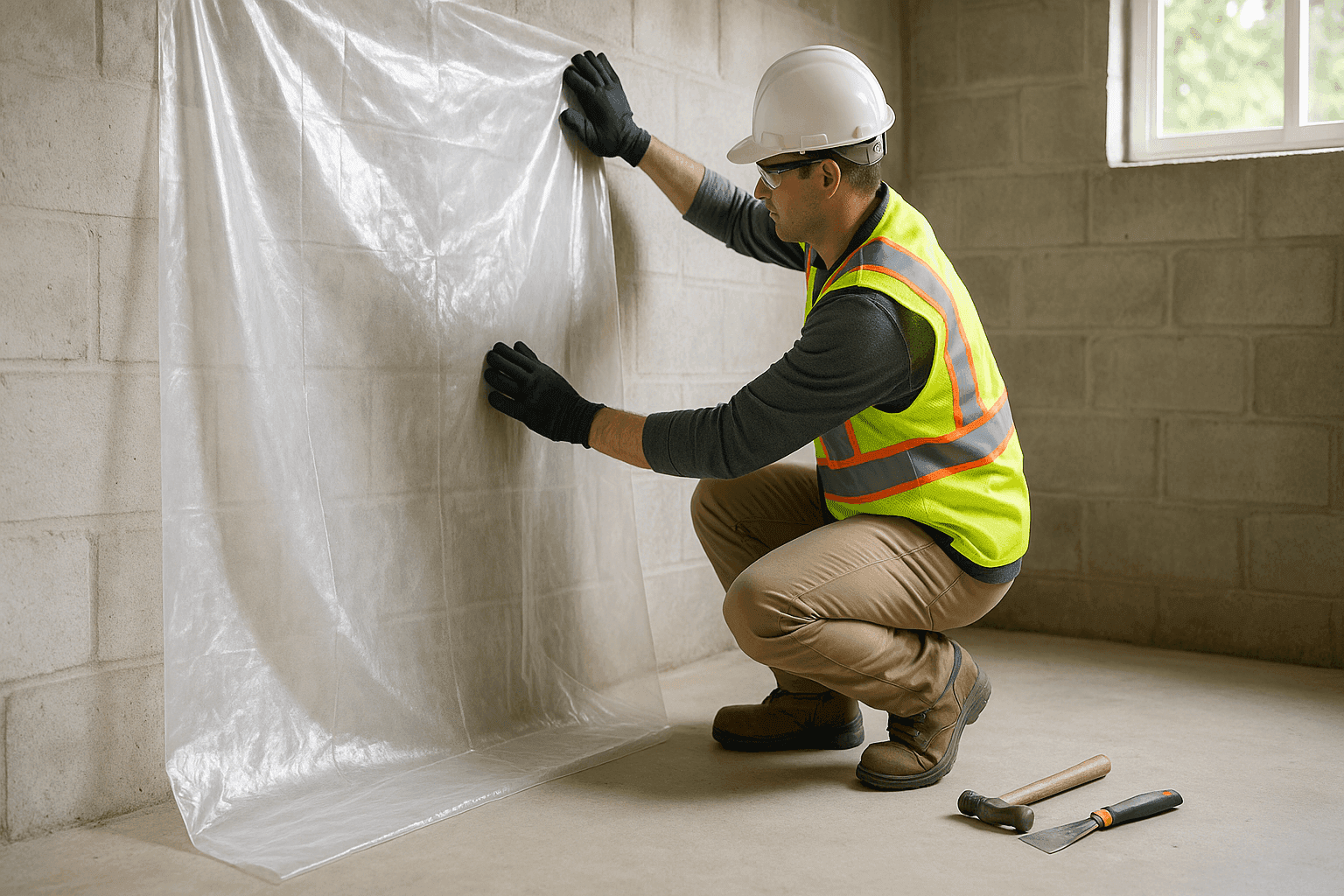
- Moisture barriers line crawl spaces and basement walls, blocking water vapor.
- Seal cracks in foundation walls and floors with epoxy or polyurethane injections.
- Crawl space encapsulation keeps ground moisture from creeping up.
Sump Pump Installation
- Sump pumps are like a home’s flood alarm system. They sense rising water and pump it out before it can settle in.
- Regularly test your sump pump—some homeowners find out theirs doesn’t work the hard way.
Drainage and Grading
- Gutters and downspouts should direct water at least 6 feet away from your foundation.
- French drains reroute groundwater away from sensitive areas.
- Regrading the soil around your home helps water flow away, not toward, the structure.
Professional Waterproofing Consultations Near You
- Detailed inspections can identify hidden vulnerabilities.
- Customized waterproofing system design ensures the right approach for your property.
- Material selection matters—some sealants and coatings perform better in damp climates.
Long-Term Maintenance for Mold Prevention 🛡️
Think of waterproofing like car maintenance. One tune-up isn’t enough. Ongoing care keeps your home protected.
Schedule Regular Inspections
- Annual professional waterproofing inspections can catch issues before they become disasters.
- Spot check basements, crawl spaces, and attics after heavy rain or thaw cycles.
Control Humidity
- Keep indoor humidity below 60%—a hygrometer is a small investment that pays off.
- Use exhaust fans in bathrooms, kitchens, and laundry rooms.
Check Seasonally
- Spring: Inspect gutters, downspouts, and grading after snow melts.
- Fall: Clear leaves and debris from gutters and sump pumps.
Maintenance Plans
- Many homeowners opt for waterproofing maintenance plans for ongoing peace of mind.
- These plans can include scheduled sump pump testing, crack repairs, and leak detection.
Trustworthy Tips Backed by Evidence
- The International Residential Code (IRC) recommends proper grading and moisture barriers for all residential foundations.
- The American Society of Home Inspectors highlights the importance of annual waterproofing inspections.
- The CDC and EPA provide clear safety protocols for mold remediation.
Always remember—when in doubt, call in a professional. Mold and water damage can hide in places you can’t see.
Immediate Safety Checklist ✅
- Shut off power in affected areas if water is near outlets.
- Move children and pets away from damp zones.
- Wear protective gear if you handle wet or moldy materials.
- If structural damage is suspected, stay out until a professional inspects.
DIY vs. Calling a Pro
Some tasks are safe for handy homeowners—like setting up fans or running a dehumidifier. But when water soaks into walls, insulation, or your foundation, it’s time to call for help.
When to DIY
- Small spills on tile or concrete, caught immediately.
- Running fans and dehumidifiers in open areas.
When to Call Blue Star
- Water intrusion in basements, crawl spaces, or behind walls.
- Recurring leaks or persistent dampness.
- Visible mold growth or strong musty odors.
- Cracks in foundation or walls.
Professional waterproofing contractors have equipment to detect hidden moisture, repair cracks safely, and recommend the right long-term fixes.
What Pros Do On Arrival
When our team at Blue Star arrives, here’s what you can expect:
- Moisture mapping to locate hidden damp spots.
- Leak detection using thermal imaging.
- Strategic drying and dehumidification.
- Removal of unsalvageable materials.
- Installation of barriers or sump pumps as needed.
- Recommendations for permanent waterproofing upgrades.
Each step follows national safety standards and local building codes.
Prevention & Maintenance
Waterproofing isn’t a one-time fix. It’s an ongoing relationship with your home.
- Schedule annual waterproofing consultations near you.
- Clean and inspect gutters and downspouts every season.
- Seal any new cracks promptly.
- Monitor humidity and act fast if it spikes.
Staying ahead of problems is simpler—and much less expensive—than fixing them after the fact.
Costs & Time Factors
Mold prevention and waterproofing can range from a quick afternoon to several days, depending on the severity.
- Small leaks: DIY drying and dehumidifying can take 1–2 days.
- Professional repairs: Crack sealing, barrier installation, or sump pump setup can take 1–3 days.
- Full waterproofing system upgrades: May require up to a week, including material curing time.
Costs vary based on your home’s size, the extent of water damage, and the type of solution needed. Waterproofing cost estimation services are available to help homeowners plan their budgets.
When It’s an Emergency 🚨
If water is pooling, electrical systems are wet, or mold is visible:
- Evacuate the area.
- Contact emergency waterproofing services immediately.
- Document the damage for insurance purposes.
- Don’t re-enter until professionals say it’s safe.
FAQ
How soon after water intrusion does mold start to grow?
Mold can grow within 24–48 hours in the right conditions.
Is bleach enough to kill mold?
Bleach may remove surface mold on non-porous materials, but it doesn’t reach mold roots in drywall or wood. Professional remediation is often required.
Will insurance cover waterproofing repairs?
Coverage varies. Document all damage and check your policy. Waterproofing consultations near you can help provide proper assessment.
How can I tell if my waterproofing system is still working?
Schedule regular inspections, test sump pumps, and watch for new cracks or damp areas.
Local & Seasonal Considerations
Rainy springs, humid summers, and snowy winters each bring unique challenges.
- In wet climates, focus on exterior waterproofing and gutter maintenance.
- Homes in flood-prone areas benefit from French drain installation and sump pumps.
- Dry climates should still monitor for plumbing leaks and condensation issues.
Staying proactive means less stress and fewer surprises, no matter the season.
Water doesn’t wait—and neither should you. If you’ve had a leak or want to prevent the next one, Blue Star is ready to help with waterproofing consultations, repairs, and maintenance plans tailored to your home.
Call Blue Star now — or reach us anytime at 888-853-4813 .